
Platform Integration · Military Small Craft
Military Maritime Systems Integration
Between the requirement and the waterline
MTAG integrates the complete small-craft mission system — power, sensors, networks, autonomy, and C2 — from architecture and installation through fielding, documentation, and operator sustainment.
Capability
MTAG treats the craft as a complete mission system: electrical backbone, DC power budget, sensor placement, network architecture, cable management, C2 interfaces, autonomy interfaces, documentation, and operator sustainment. The objective is an integrated configuration that works at speed and remains supportable underway.
The objective is a fielded configuration that works at speed, can be supported by the crew, and fits the operational platform rather than forcing the platform around a bench-top design.
Electrical Backbone
Power budgeting, DC architecture, distribution, cable routing, and installation practices for combatant and support craft.
Sensors + C2
Integration of thermal, EO, mission sensors, networked C2, and platform interfaces into a coherent system.
Operator Sustainment
Documentation to operator level so crews can troubleshoot and sustain fielded systems underway instead of waiting for a contractor.
Field-informed integration
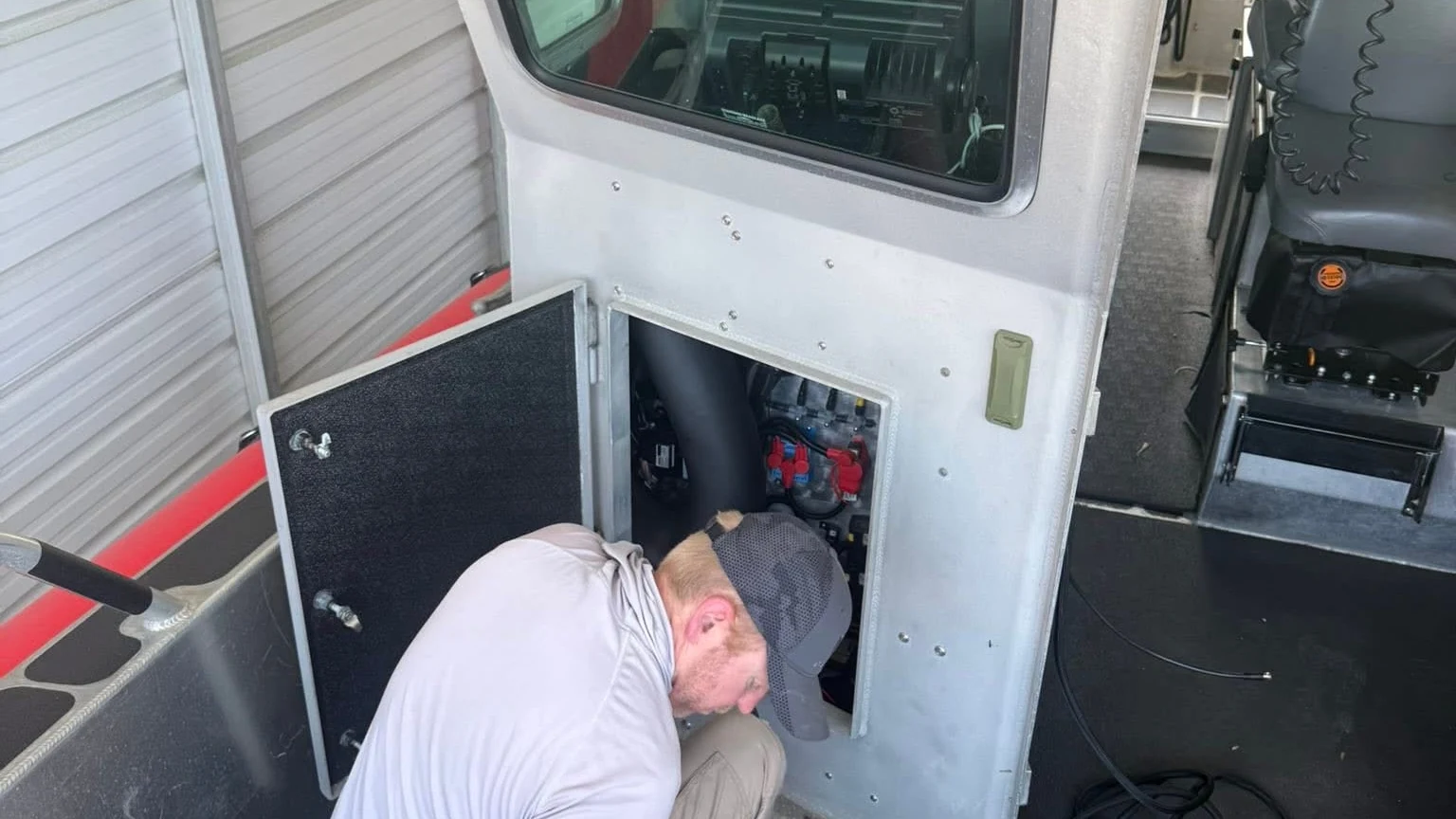
Field-to-fleet lineage
Combat lessons carried into later riverine craft.
During USMC Small Craft Company service, Joshua Iversen provided documented design recommendations from combat operations to NAVSEA Carderock. His record states those recommendations were later utilized on the U.S. Navy Riverine Patrol Boat, Riverine Assault Boat, Riverine Command Boat, and Boat Master Rough Terrain Trainer.
Discuss the requirement.
Public pages contain sanitized capability information only. Technical packages, restricted performance material, pricing, and proprietary integration documentation are released through the vetted client portal.
Direct contact
Natalie Bullington
Chief Financial Officer & Contract Administrator